
Two trusted Australian sources word the timing slightly differently, and parents notice. The Australian Dental Association says “first dental visits are recommended when the first teeth appear in the mouth”. NSW Health advises a “first dental practitioner visit by 12 months of age”. Since most children get their first tooth well before their first birthday, the two line up in practice: book when that first tooth arrives, and by the first birthday at the latest.
Why so early, when there is barely a tooth to check
The first appointment is not really about treatment. It establishes whether teeth and jaws are developing as expected, gives you feedback on brushing and diet while habits are still forming, and, just as importantly, lets your child meet a dental practice before anything is ever wrong.
That last point matters more than it sounds. A child whose first experience of a dental chair involves pain has a very different relationship with dentistry than one who has already sat in it twice and found it uneventful.
What actually happens at the appointment
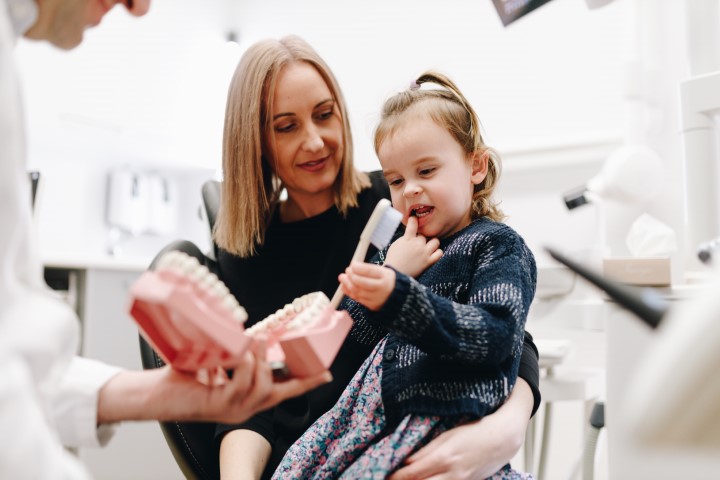
According to the ADA, the dentist takes a health history, including questions about diet, behaviours and oral hygiene. They then examine the teeth, tongue, cheeks, gums, lips and throat.
Depending on your child’s age and how the examination goes, the dentist may also clean the teeth, apply fluoride, or take X-rays. If your child needs treatment that would be better handled by a specialist, the dentist may refer you to a paediatric dentist.
For a toddler, the examination itself is brief. Much of the appointment is conversation with you: what your child eats and drinks, how brushing is going, whether there is thumb sucking or prolonged bottle use, and what to expect over the next year.
How to prepare, and the one thing not to say
The ADA’s preparation advice is worth reading properly, because part of it is counter-intuitive.
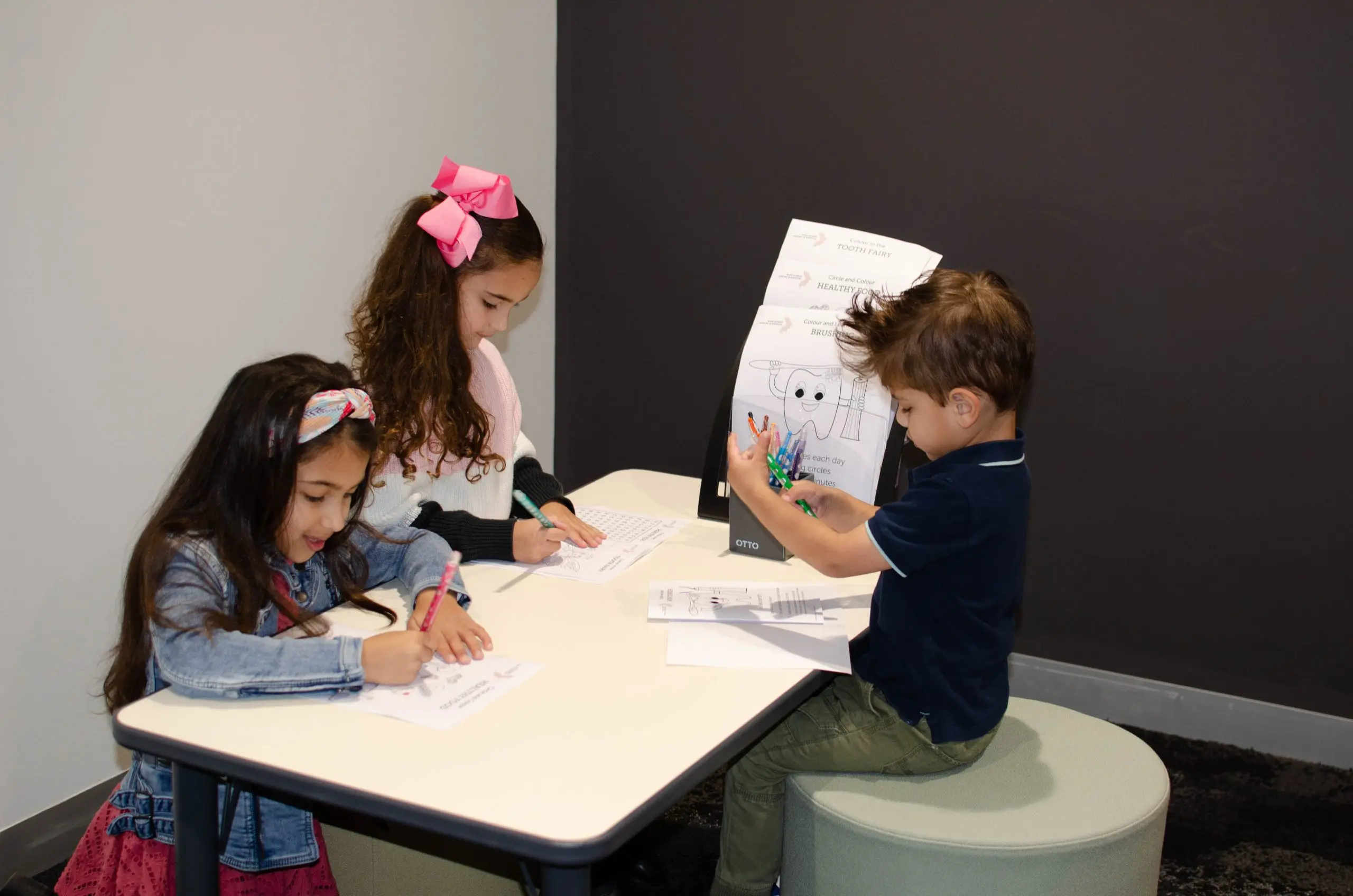
The things it suggests doing are straightforward: talk about what happens at a dental appointment, play pretend dentist at home, practise counting teeth, read positive stories about going to the dentist, and watch cartoons featuring dental visits.
The things it suggests avoiding are where most well-meaning parents slip:
- Do not share your own bad dental experiences. The ADA is explicit that a parent’s anxiety transfers to the child.
- Do not use the dentist as a threat, as in “if you don’t brush, the dentist will have to drill”.
- Do not tell your child to be brave. This is the one that surprises people. Telling a child to be brave implies there is something to be frightened of. A child who was not worried now has a reason to be.
Keeping your own demeanour relaxed does more than any amount of preparation. If you are anxious about dentistry yourself, it is worth saying so to the practice when you book, rather than in front of your child.
What it costs for children in NSW
NSW Health states that “all NSW children under 18 years can access free dental care at public dental services”. To access it, a parent or guardian signs a Child Dental Benefits Schedule Bulk Billing Patient Consent Form. NSW Health also notes that if a child is not eligible for the Schedule, or has already used their benefit, care is still provided at no cost through those public services.
That applies to public dental services specifically. At a private practice the arrangements differ, so ask what applies to your family when you book. If your child is eligible for the Child Dental Benefits Schedule, it is worth confirming how the practice handles it before the appointment rather than at the front desk afterwards.
Frequently asked questions
At what age should a child first see a dentist in Australia?
The Australian Dental Association recommends the first visit when the first teeth appear in the mouth. NSW Health advises a first dental practitioner visit by 12 months of age. Because most children get their first tooth between about six and ten months, the practical answer is to book when that first tooth arrives, and no later than the first birthday.
What happens at a child’s first dental visit?
The dentist takes a health history covering diet, behaviours and oral hygiene, then examines the teeth, tongue, cheeks, gums, lips and throat. Depending on your child’s age, they may also clean the teeth, apply fluoride or take X-rays. Much of the appointment is spent talking with the parent about brushing, diet and what to expect next.
How often should my child see a dentist after that?
NSW Health advises continuing regular dental check-ups after the first visit. The right interval depends on your child’s individual risk of decay, which is something the dentist assesses at the appointment, so ask them to recommend a schedule for your child rather than assuming a standard gap.
My child is already frightened of the dentist. What can I do?
Tell the practice before the appointment so they can allow extra time and take it slowly. Avoid reassurance that draws attention to fear, including telling your child to be brave. For children whose anxiety makes ordinary treatment difficult, some practices offer additional options, and it is reasonable to ask what is available before you book.
Booking a first visit in Warrawong
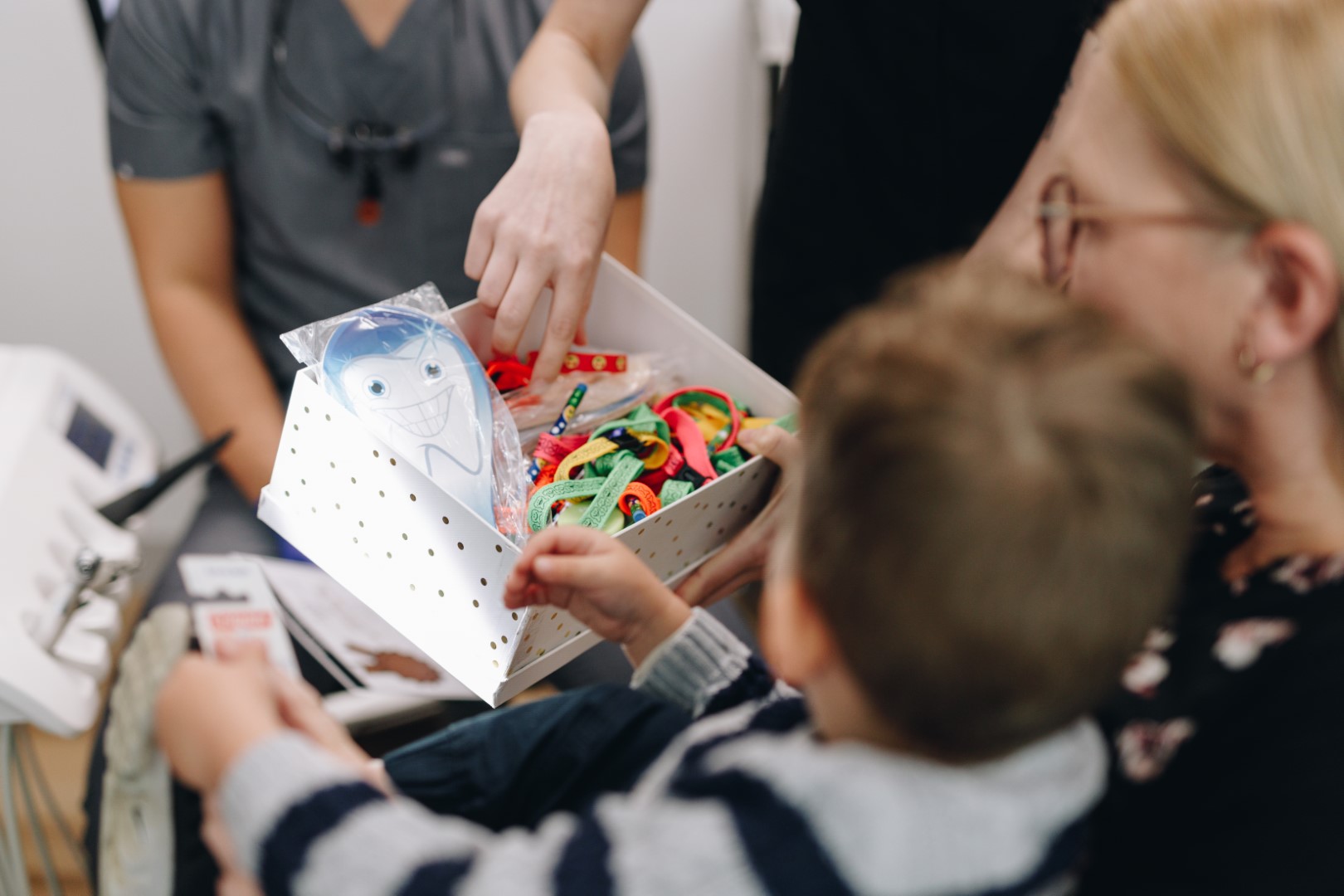
A first appointment is short, and the point of it is to make the next twenty uneventful. King Street Dental sees children at its Warrawong practice, and you can read more about children’s dentistry or the King Street Kids program. Parents often arrive with a list of questions, and the ten most common ones are answered separately. For practice details and location, see the Warrawong dental page.
This article is general information and is not advice about your child’s individual circumstances. Speak to a dentist about your own child.